Franchise Speed to Lead: What the Data Actually Says
Part of our complete guide: Franchise Lead Follow-Up With AI
Most franchise brands are slow to answer a new inquiry, and a lot of them never answer at all. That part is well documented. What gets exaggerated is how much speed alone will do for you.
Here's what the published numbers say, where people misquote them, and how we built the first touch in our case study.
How fast franchise brands really respond
Two groups test this in franchise development specifically.
FranFunnel sent one real web inquiry to each of 530 brands in spring 2025:
sent nothing at all
sent a personal reply within 5 minutes
average time to a first email reply
never sent a text
Source: FranFunnel, 2025
- Sent nothing
- Automated reply only
- Personal reply after 5 minutes
- Personal reply within 5 minutes
Source: FranFunnel, 2025. The 31% is calculated from the other three.
ServiceScore's 2025 mystery shop tested 102 brands and found that 44% called the prospect. Across its yearly shops, only about 4 to 5 in 10 brands ever pick up the phone for a web inquiry.
of brands published a development phone number
of those answered
had someone who answered and could handle the inquiry
Source: ServiceScore mystery shop, 2025
Now put that next to the cost. The 2026 Annual Franchise Development Report puts the average cost per lead at $351 in 2025, up from $271 a year earlier. Paying that and then not calling is the expensive part.
The stats people misquote
You've probably heard that responding in 5 minutes makes you 21 times more likely to convert. That isn't what the study found.
You'll hearReply in 5 minutes and you're 21x more likely to convert.
What it saysThe odds of qualifying drop 21x between minute 5 and minute 30. The study did not look at close rates.
You'll hearYou're 100x more likely to close.
What it saysThat 100x is about reaching the person, not closing them.
You'll hearCalling within an hour beats a day by 7x.
What it says7x compares hour one with hour two. Against 24 hours or later, it was more than 60x, and that's for qualifying.
Sources: InsideSales, 2007 and Harvard Business Review, 2011
A lead response vendor was behind both studies, so read them with that in mind.
So the honest version is this: being fast gets you the conversation. It doesn't sign the deal. A franchise sale still takes about 24 weeks on average.
Why "call every lead in 60 seconds" is a bad promise
A lot of tools sell this. It has two problems.
Consent. The FCC treats AI voices as artificial voices under the TCPA, so an AI sales call needs consent that covers it. Portal and broker leads usually consented to the portal, not your brand. We go through this in our AI voice compliance guide.
Hours. A lead who fills in a form at 11pm shouldn't get a robot calling at 11:01pm.
How we built the first touch
For the firm in our case study, a new lead gets called and every answer gets written back to the CRM, so the rep starts with the full picture. On new builds, we put this consent and calling hours check in front of the call.
A new lead lands in the CRM. Does the consent cover an AI voice call?
It says it's an AI, qualifies the candidate and tries to book.
The AI calls when the window opens.
A rep calls. The AI stays out of it.
Across 5,379 calls, the AI reached a live person 37% of the time and voicemail another 40%. It handled 48.5 hours of live conversation that nobody on the team had to dial.
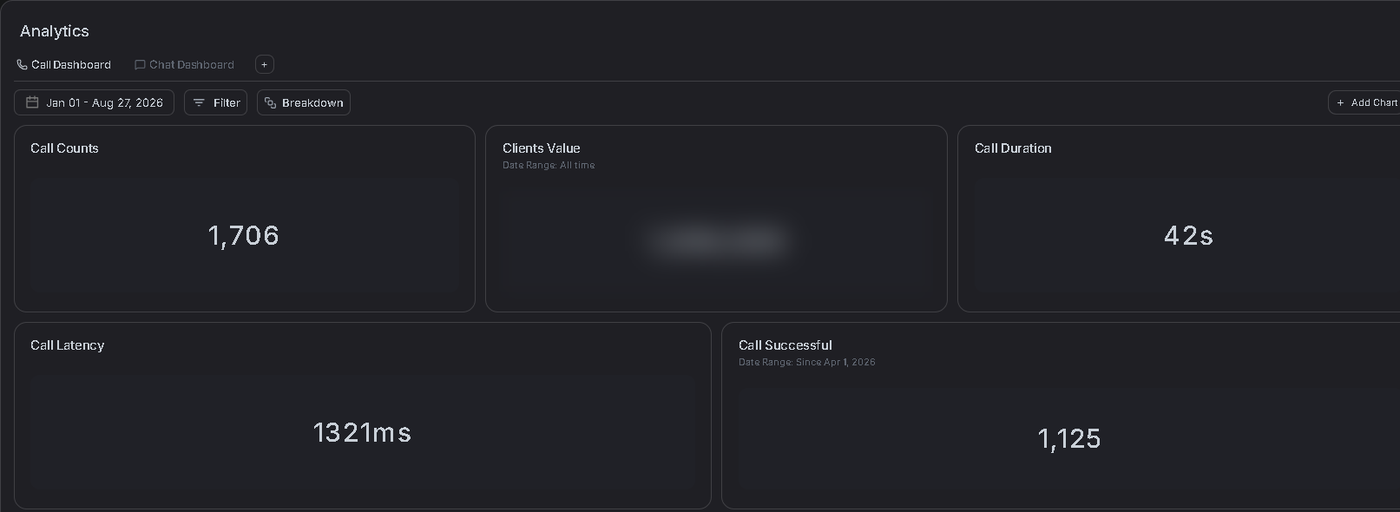
We haven't published an average seconds-to-first-dial number yet, because we haven't finished matching every call to the time each lead was created. When we have it, we'll publish it.
What to do this week
- Time your own form
Fill it in once in business hours and once at night.
- Check who called
Did a person phone you, or did you only get an automated email?
- Read your consent text
Does it name your brand and mention AI or prerecorded calls?
If you'd rather not test yourself, we'll do it for you with a free inquiry teardown.