Case study
From 89 to 163 booked appointments a month
A franchise consulting firm was paying for leads from ads, website forms and third-party feeds. The leads were coming in, but too many went cold. We rebuilt what happens between the inquiry and the booked meeting.
The results
| Monthly average | Before | After | Change |
|---|---|---|---|
| Booked appointments | 89 | 163 | +83% |
| Show rate | 32% | 41% | +9 points |
Before is June to December 2024, the CRM's full history before the AI. After is January 2025 to August 2026.
What the AI did on the phone
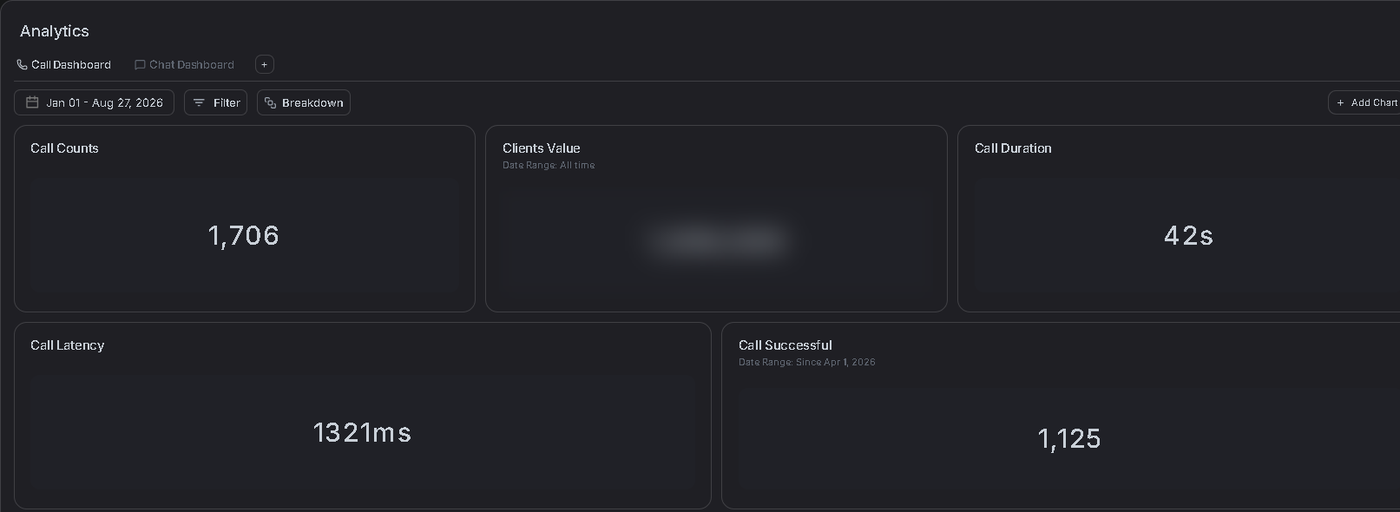
From January 2025 to September 2026, nobody on the team dialed these calls.
| Calls placed by the AI | 5,379 |
| Unique leads worked | 1,733 |
| Calls that reached a live person | 1,997 (37%) |
| Calls that reached voicemail | 2,169 (40%) |
| Different people reached live | 1,214 |
| Time in live conversation | 48.5 hours |
| Live calls where someone asked for a callback | 355 |
| Live calls that ended with a specific appointment time | 443 |
Those last two rows count calls, not people. One person can appear more than once.
What we built
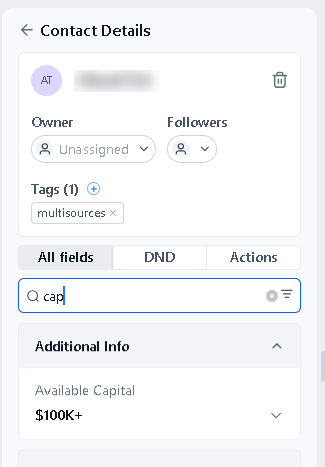
All sources, one CRM
Facebook ads, 18 website forms, email, webhooks and third-party feeds all land in GoHighLevel. Why this has to come first.
Speed to lead
A new lead triggers an AI voice agent that holds a real conversation, qualifies the candidate and writes the answers back to the CRM. What the speed data really says.
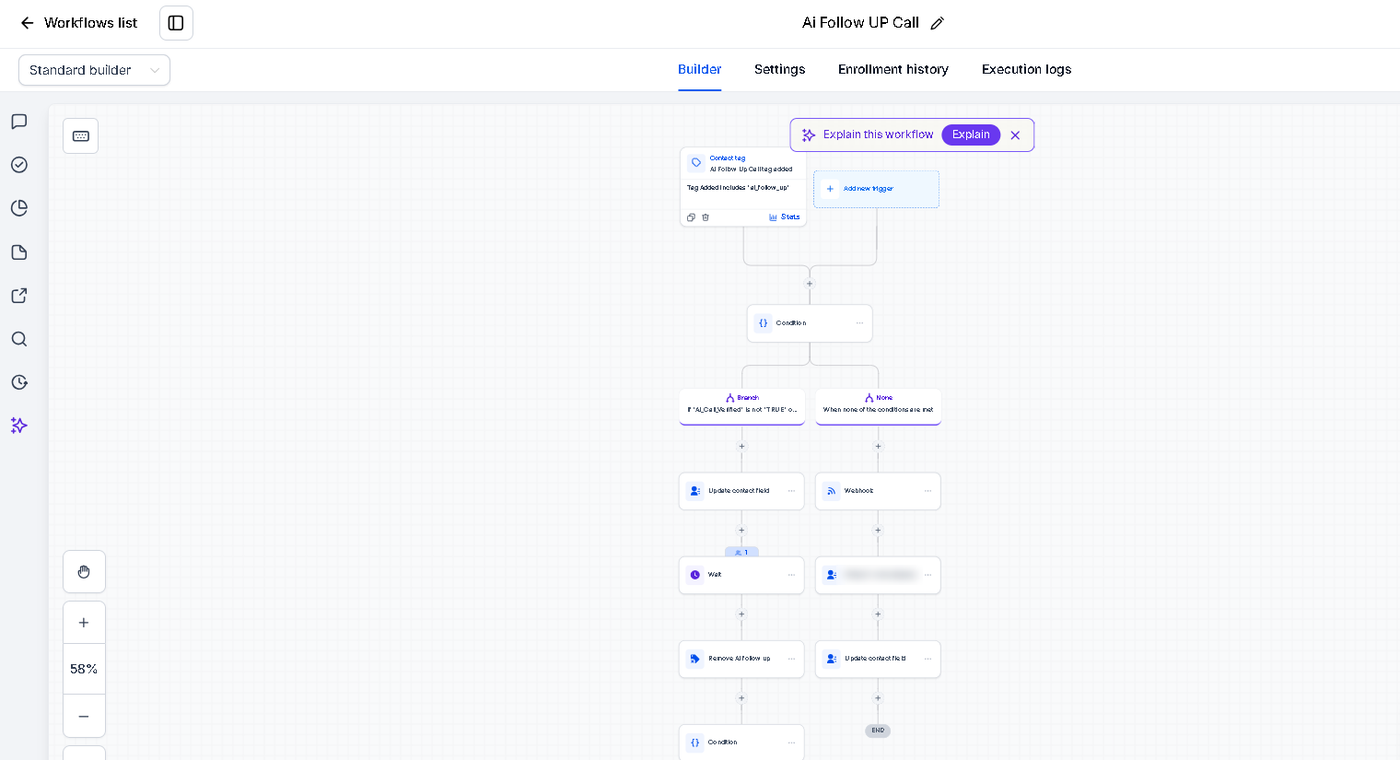
Follow-up system
Callbacks and appointment reminders run on their own, so a busy rep doesn't mean a dropped candidate. How the follow-up works.
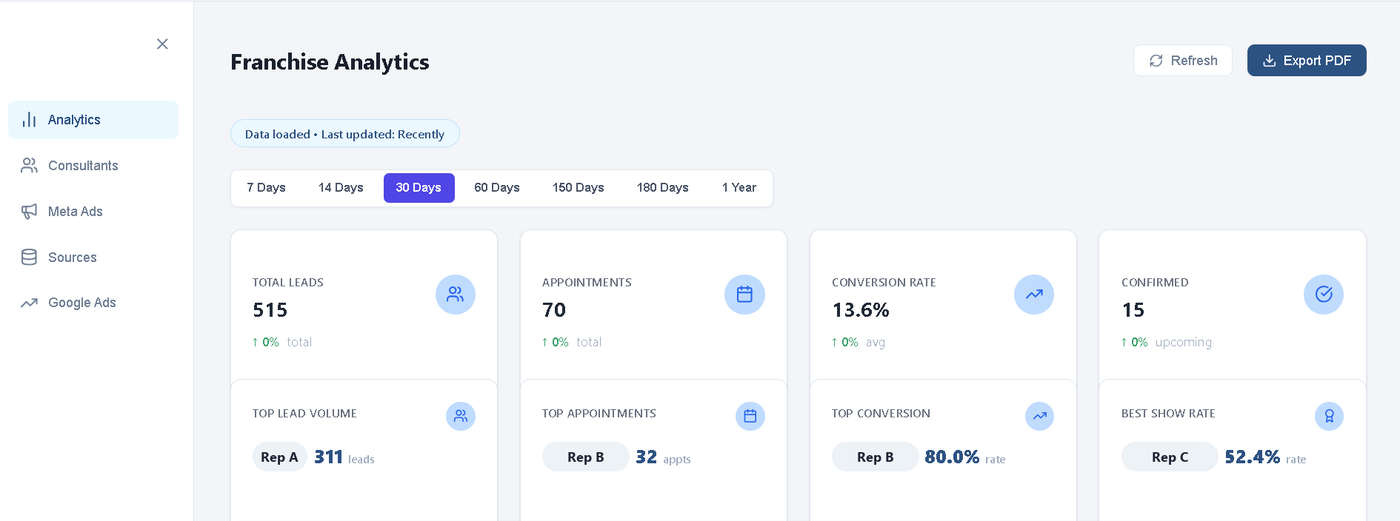
Full-data dashboard
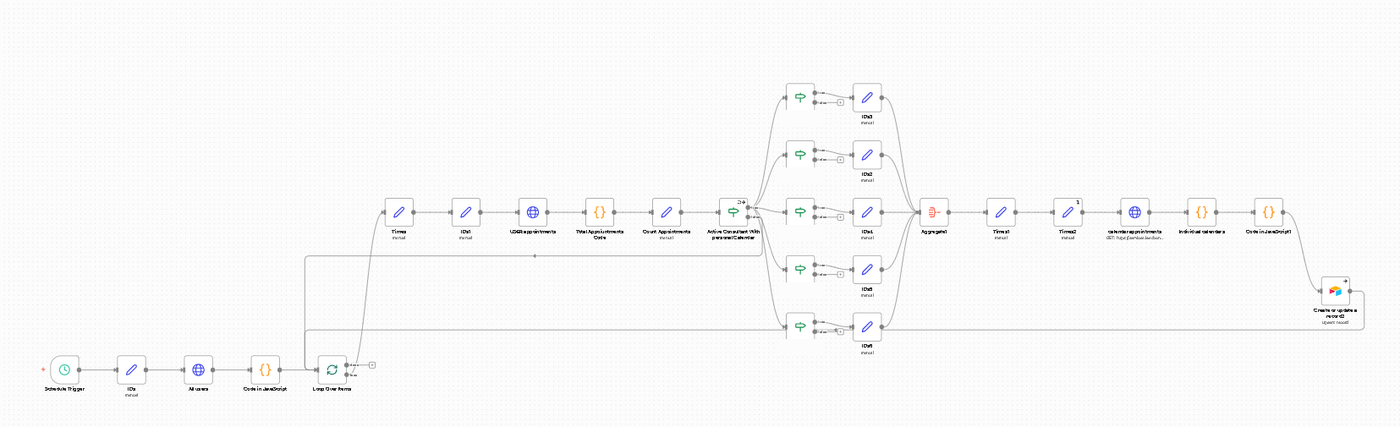
Automated workflows pull leads, appointments, referrals and sources into one dashboard, broken down by consultant. The numbers we track.
AI RevOps Engine
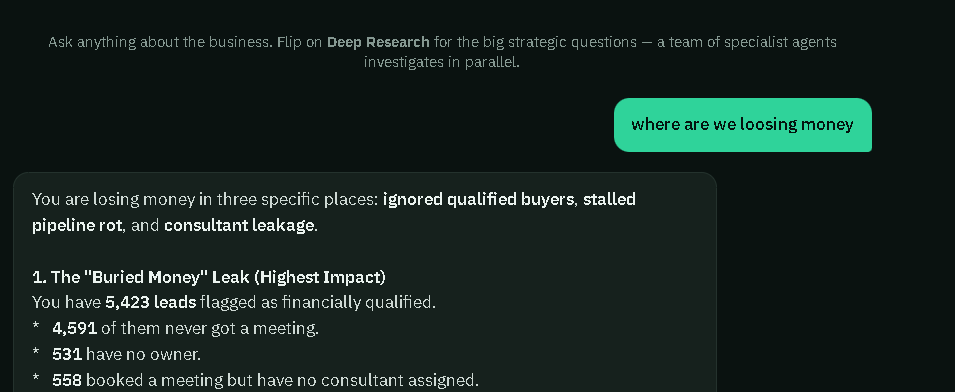
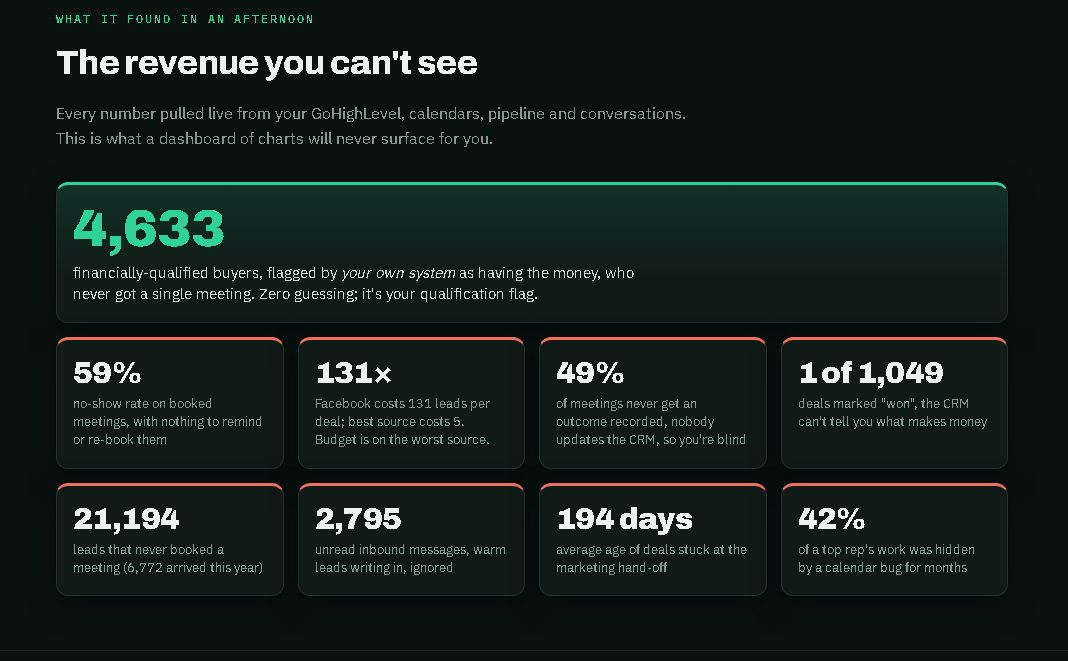
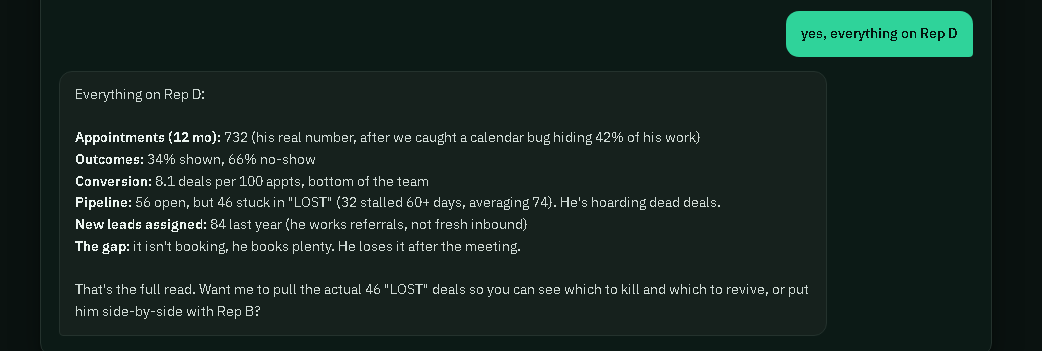
The newest piece reads the CRM, calendars, ads and calls, calculates every metric in code and answers plain-English questions. What it finds.
What we don't claim
- We don't claim every lead got called. The AI worked 1,733 unique leads, while roughly 750 came in each month.
- We don't compare lead volume or conversion rate. The 2024 numbers include an initial CRM import, which would flatter the result.
- We don't publish an average speed. We haven't finished matching every first dial to the time the lead was created.
- We don't credit the AI alone. Other things changed over those 20 months too.
- We don't quote deals or earnings. Appointments and show rate are what we measured.
How the numbers were pulled
Call figures come from the live calling platform record, January 6, 2025 to September 26, 2026. Before and after figures come from the CRM, across about 24,000 contacts and every calendar event, as per-month averages.