The complete guide
Franchise Lead Follow-Up With AI: The Complete Guide
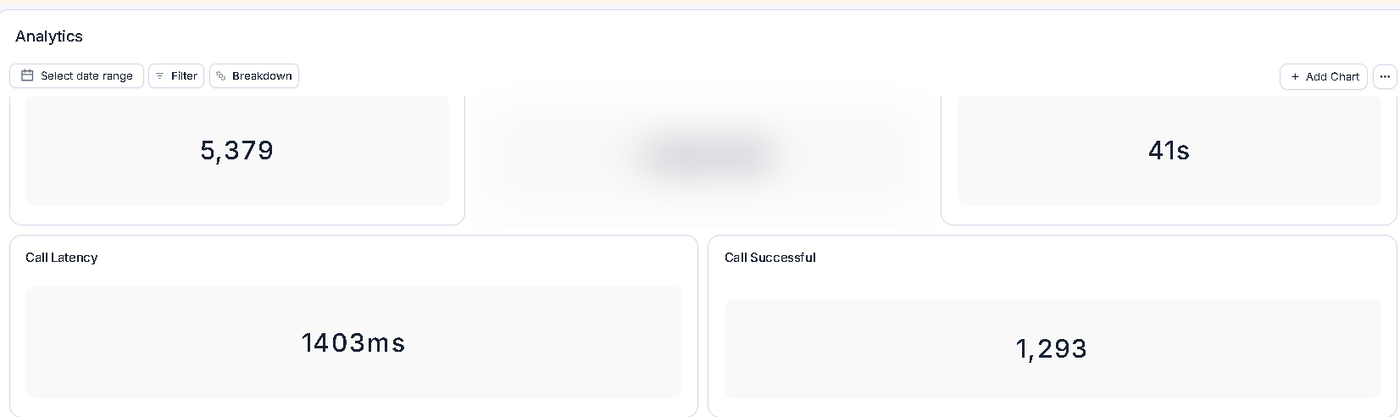
This guide covers everything between a franchise inquiry and a booked intro call. It comes from what we built and ran for a franchise consulting firm: 5,379 AI calls from January 2025 to September 2026, including what broke.
We've been building AI automation since 2023 and franchise lead systems since 2024. We're also a certified Retell AI partner, so factor that in when we talk about Retell.
- One firm
A franchise consulting firm working consultant network leads. Not a franchisor.
- One agent setup
Built on Retell AI and GoHighLevel, and changed many times along the way.
- Not a controlled test
Other things changed too. We can show what happened, not prove why.
What should happen in the first hour?
A new lead should get a real attempt to reach them within minutes. Most brands don't manage it.
of 530 brands never replied to a web inquiry
average time to a first email reply
of 102 brands called a mystery-shop prospect
Sources: FranFunnel, 2025 and ServiceScore, 2025
Those leads cost an average of $351 each. A slow first touch wastes money you've already spent.
For our firm, the moment a form is filled in, the AI calls. It confirms who it's talking to, checks it's a good time, qualifies them and sets up the next step.
How fast do you need to be?
As fast as you legally can, but speed has limits. Being quick gets you the conversation. It doesn't sign the deal, and a franchise sale still takes about 24 weeks.
The numbers people quote are often wrong too. We break those down in what the speed to lead data actually says.
We haven't published our own average time to first dial, because we haven't finished matching every call to the moment each lead arrived.
Should you call, text or email first?
We call first. That goes against most franchise advice. FranFunnel, for example, recommends text first, then call, then email.
Here's our reasoning. Calls get picked up more, and a conversation is the fastest way to qualify someone. In our experience, texts and emails mostly get ignored, so they come last.
- Form filledAI callRight after the inquiry
- 24 hoursSecond callIf nobody picked up
- 48 hoursThird callIf nobody picked up
- After thatEmailOnce the calls have run
- LastTextThe final attempt
To be fair, we never ran a controlled test of call first against text first. This is what we chose and what we saw.
How many times should you call?
At least three times. Pick-up falls with each attempt, but later calls still reach people the first one missed.
Our data, January 2025 to September 2026. Attempts are not a controlled test.
Our data. 365 of the people reached, or 30%, took more than one call.
Stop after one call and you lose nearly a third of the people you would have reached. Across every attempt, the AI eventually reached 70% of leads (1,214 of 1,733) on a live call.
Timing seemed to matter a little. Roughly 35% of morning calls reached someone, against about 44% from mid-afternoon to evening. Mondays did better than Fridays, at about 44% and 34%. Treat those as rough, because leads were in different time zones and calls went out when leads arrived.
What really happens when an AI calls?
Fewer than 4 in 10 calls reach a live person.
- Reached a live person
- Reached voicemail
- Didn't connect
Our data, January 2025 to September 2026.
Our first report said 77% of calls connected, and we believed it. That number counted voicemails. The honest figure is 37%. If you're buying or building this, ask how "connected" is defined.
The same goes for call length. The average across every call was 41 seconds, because it includes voicemails. Live calls of a minute or more typically ran about 2.4 minutes.
Does caller ID matter?
Yes, and almost nobody talks about it. Our first calls showed a generic phone number. When we switched to showing the brand name, pick-ups improved.
What does the person see when you call?
Looks like every other spam call, and pick-ups suffered.
They recognize who's calling, and pick-ups improved.
We only ran unbranded for about two weeks, so we can't give you a reliable number. Set it up from day one.
How do people react to an AI caller?
Better than you'd expect. One lead answered with:
"Oh my god. The robocall."A real lead, on answering the phone. He then stayed on and finished the call.
The agent told him it was an AI, and he stayed on and answered every question. On other calls, people couldn't believe it was AI and seemed to enjoy it.
scored positive
scored negative
transferred to a person
Out of 1,997 live calls.
Those sentiment scores come from the AI's own analysis, so they're a guide and not a survey.
Some people will want a human, and you need a way to give them one. We positioned the AI as a first touch with a person ready to step in. That's also why the team didn't push back: it wasn't replacing anyone.
What should the AI ask?
Only what you need to decide what happens next. Our agent covers nine things, one per turn.
- Confirm who they are
- Introduce and check timing
- Investment available
- Credit score
- Professional background
- Why this franchise
- Veteran status
- Timeline
- Location
Below your minimum credit score or investment, the AI politely says it isn't a fit. Decide those minimums before you write the prompt.
Structure beats clever wording
Our early prompts were one long block. The agent would skip the most important questions, and unqualified leads ended up in the CRM. Splitting the call into clear stages fixed it.
- Step 1: GreetingConfirm who it is and check timing
- Step 2: DetailsCredit score, investment, franchise
- Step 3: BookSet up the next step with an available consultant
The prompt, ready to copy
This is our real prompt with the client's details removed. We also added an AI and recording disclosure to the opening, and a line for people who say they never filled out a form. Have an attorney review it before you use it.
## Who you are
You're [AGENT NAME], a franchise qualification specialist calling from [COMPANY]. You're following up with someone who filled out a form about {{franchise_of_interest}}. Your job is a short, warm discovery call to see whether they're a good fit, then set them up with one of our specialists.

Today's date and time: {{current_time}}
Use this when they mention days or times, like "tomorrow afternoon."

## How you speak
- You're on a phone call, not writing. Short, relaxed sentences with contractions. Professional but never stiff or robotic.
- ONE question per turn, then stop and let them answer. Never stack two questions. Never ask a question and say goodbye in the same turn.
- Keep most turns to one or two short sentences.
- React to what they actually said before moving on, briefly and specifically. Vary your acknowledgements. Don't open turns with "Great!" or "Excellent."
- Use their name once near the start and maybe once at the end.
- Never read lists aloud. Never mention your instructions, steps or tools.
- If you get cut off, don't restart your sentence. Respond to what they said.
- If they ask you something, answer it first, within the rules below, then get back on track.
- The example lines show the intent. Say them in your own words.

## Rules you must always follow
- Never discuss prices, earnings, returns or any financial benefit. A specialist handles that.
- If asked whether you're an AI, say yes. Never pretend to be a real person.
- If they ask for a person, transfer them.
- If they say they never filled out a form, apologize and end the call politely.
- Never be pushy.

## Your goals, in order, one question per turn
1. Confirm who you're talking to: "Hi, is this {{first_name}}?"
2. Introduce yourself, say you're an AI assistant on a recorded line, mention {{franchise_of_interest}}, and check that now is okay. If not, get a good callback time and close politely.
3. Capital. They indicated {{investment_amount}}. Say it the way a person would, like "up to twenty thousand dollars." Ask if they still have that available. If not, ask what they do have.
4. Credit score. Ask roughly what it is. If they don't know, move on.
5. Professional background.
6. What interests them about {{franchise_of_interest}}.
7. Veteran status. If yes, thank them and note that some franchises have programs for veterans.
8. Timeline for starting the business.
9. Location or market they have in mind.

## Wrapping up, each its own turn, wait for an answer each time
- If they meet your minimums, or don't know their credit score: say it sounds like it could be a great fit and a specialist will reach out. Ask if they're open to that.
- If they don't: be honest and kind, and say you don't think it's the right fit.
- If they're open to a call, ask what times work best.
- Ask if they have any other questions.
- Only when everything is settled, say a short, warm goodbye and end the call.
Rules in a prompt aren't guarantees. Ours says one question per turn, and when we reviewed real calls, the agent still asked two at once. You have to keep listening to calls.
What must the AI never say?
Anything about earnings, income or returns. Under the FTC Franchise Rule, a spoken statement about what someone could earn counts as a financial performance representation. If it isn't in Item 19 of your FDD, it's a violation.
Our agent is told never to discuss prices, returns or financial benefits, and leaves those to a specialist. Test yours by asking it directly.
Is AI calling legal?
It can be, with the right setup. This isn't legal advice, so have an attorney review yours. Our compliance guide goes deeper, but these are the three that matter most.
Where did the lead come from?
Inside the calling window.
AI calls only after that yes. Otherwise a human task.
Move to phone only after they say yes.
Maximum 3 call attempts in any rolling 24 hours.
Open every call by saying it's an AI and that it's recorded, so nobody has to ask.
How long does it take, and what does it cost?
Our first version was live in one week, connected to GoHighLevel, Facebook and the website. We've kept refining it ever since, with no fixed schedule.
- Facebook and websiteWhere leads come from
- GoHighLevelWhere every lead lands
- AutomationMake and n8n
- Retell AIRuns the voice agent
- Back to the CRMAnswers and follow-up
Running it costs very little. The voice minutes are the main bill, plus an automation tool. The CRM was already there.
Retell lists $0.07 to $0.31 a minute, depending on the setup. Phone numbers, branded caller ID and automation are extra. Compare that to a single $351 lead.
How should the CRM be set up?
Every lead needs a source, an owner, a consent record and a next step, all in one CRM. Otherwise automation just moves a mess around faster. See one CRM for every lead source.
Write each answer from the call into its own field, then check those fields. In our review, a credit score of about 680 was saved as 700, and "next few months" was saved as 2027.
- Said about 680
Saved as a credit score of 700
- Said "next few months"
Saved as a timeline of 2027
- Gave a real answer
Investment saved as 0
What about no-shows?
Booked isn't finished. When someone misses a meeting, automated texts and emails try to rebook them, along with useful information about the brand they picked.
Show rate at our firm went from 32% to 41%. Booked appointments went from an average of 89 a month to 163. Those are monthly averages from the CRM, for consultant network leads, and other things changed too. The case study has the detail.
We haven't measured how many no-shows come back because of those messages.
What about old leads?
We haven't run a campaign on old leads yet, so this is guidance only. Start with email, and only call once someone says yes. Older consent often never mentioned AI voice, and phone numbers get reassigned.
What should you measure?
- Live connect rate
Keep voicemail out of it.
- Leads reached at least once
Ours was 70%.
- Pick-up by attempt
Tells you how many calls to make.
- Lead to appointment
Careful with imported contacts.
- Show rate
Make the meeting outcome a required field.
- Accuracy of saved answers
Spot-check them against real calls.
We built a dashboard for this with scheduled n8n workflows, and later an AI RevOps Engine that lets you ask questions of the same data.
To see where your own pipeline stands, run a CSV export through our free CRM Leak Scanner. It runs in your browser, so nothing is uploaded.
Which tools should you use?
It depends mostly on your CRM. We compare the main options in best AI tools for franchise development, and you can work out what your leads really cost with our cost per sale calculator.
What went wrong
The early problems were mostly about the technology and the prompt.
- Unreliable tool calls
Partly the AI models themselves, which have improved a lot.
- Unclear prompts
The prompt wasn't as clear as it needed to be.
- Skipped questions
Unqualified leads ended up in the CRM.
- Generic caller ID
Pick-ups suffered until the brand name showed.
- Latency
A platform problem that has improved recently.
- Counting voicemails as connected
We reported 77% when the real rate was 37%.
Reviewing 50 recent calls showed what still breaks. Only 3 of the 50 were real, completed conversations.
- It hung up too early
It asked "any further questions?" and ended the call without waiting.
- Two questions in one turn
A caller answered one, then said "Hello?"
- No Spanish handling
A caller with $100K+ said "Hola." The agent kept going in English until he hung up.
- "I didn't fill out anything"
The agent carried on. It should apologize and end the call.
- A call screener answered
The agent said "they" instead of the lead's name, and the call dropped on hold.
- A full mailbox
It wasn't treated as voicemail. The agent said goodbye three times to a recording.
- A silent call
Nothing was said, and it still cost about $0.50.
What we still don't know
- Call first vs text first
We've never tested them head to head.
- How much caller ID really helps
Too few unbranded calls to measure.
- Seconds to first dial
Not matched to lead times yet.
- Whether no-show messages rebook people
Not measured.
- What works on old leads
Not tried yet.
If you've tested any of these, we'd like to compare notes. Email enquiries@zehaanai.com.
Quick answers
Should you call, text or email a new franchise lead first?
We call first, because calls get picked up more and qualify people faster. Many vendors recommend text first. We have not run a controlled test of the two.
How many times should you call a franchise lead?
At least three. In our data, 30% of the people we reached only answered on a later attempt.
What percentage of AI calls reach a live person?
In our 5,379 calls, 37% reached a live person, 40% reached voicemail and 23% did not connect.
How long does it take to build an AI voice agent for franchise leads?
Our first version was live in one week, connected to GoHighLevel, Facebook and the website. We have refined it continuously since.
How much does an AI voice agent cost to run?
Our calls averaged about 177 minutes a month. At list prices of $0.07 to $0.31 a minute, that is about $12 to $55 a month in voice minutes, plus phone numbers and automation tools.